


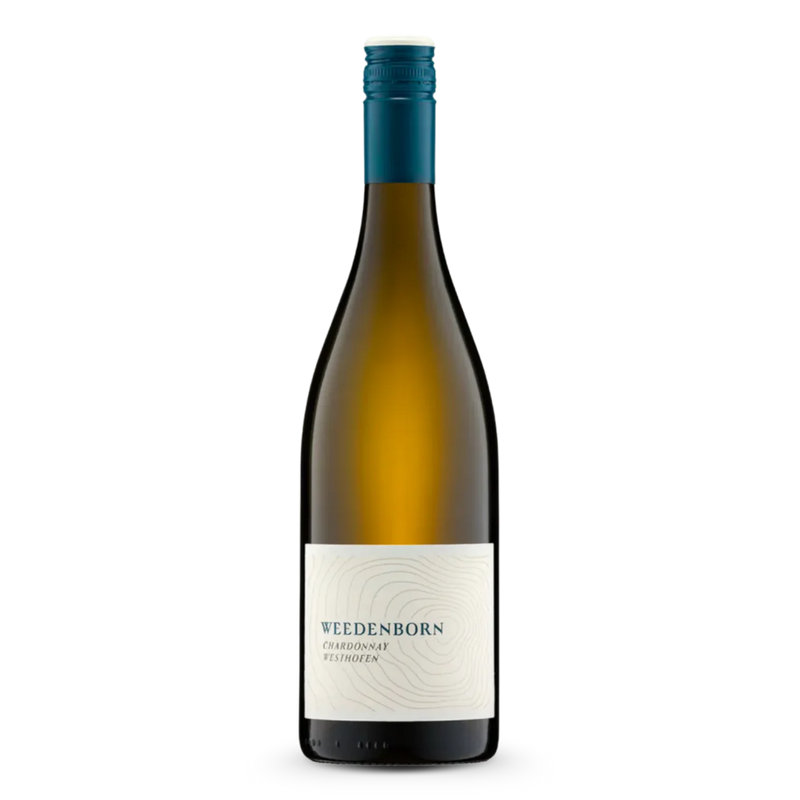


The slopes around Westhofen are part of the chalk-rich wine landscape of the Wonnegau.
-
Location / origin: The wine comes from Westhofen, in the south of the German wine region of Rheinhessen. It belongs to the "Ortsweine" (village wines) of Weedenborn: wines where the provenance from a single village is central.
-
Soil: Limestone, calcareous marl, and loam characterize the vineyards around Westhofen. The soil composition varies by slope and plot; clay and loam layers retain moisture, supporting water supply during drier periods.
-
Climate & influences: The higher-altitude wine landscape toward Monzernheim, the home of Weedenborn, benefits from cooling winds. The grapes ripen gradually here, which allows for aromatic development and the retention of natural freshness.
Skin contact before pressing and a long maturation on the lees build aromatic intensity and texture.
-
Harvest & processing: The grapes are hand-picked, destemmed, and lightly crushed. Afterward, juice and skins remain in contact for about 18 hours before the must is pressed. This skin maceration helps release aromatic compounds from the grape skins.
-
Maturation / oak aging: The Chardonnay is aged in wooden barrels and remains in contact with the yeast lees for an extended period. This lees contact contributes to the soft, full mouthfeel, while barrel aging provides a subtle toasted and spicy frame. This gives the ripe fruit and texture time to form a cohesive whole.
The natural breadth of the grape forms a beautiful foundation for this full, dry style.
-
Chardonnay – Westhofen: Chardonnay brings ripe stone fruit and a smooth mouthfeel, with enough acidity to keep the flavor fresh. The grape also lends itself well to barrel aging and lees contact, allowing texture and fine spice to play an important role alongside the fruit.


