
Sauternes
Sauternes is a sweet white wine from Bordeaux, made from botrytis grapes that are dried to concentrate aromas and flavors. The region is known for noble rot and iconic producers like Château d'Yquem .
10 products


Order now, shipped tomorrow Shipped tomorrow
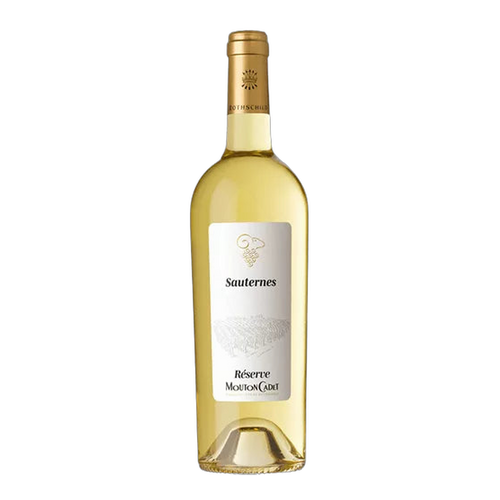
Shipment within approx. 2 business days. Shipment within approx. 2 business days.


Shipment within approx. 2 business days. Shipment within approx. 2 business days.


Order now, shipped tomorrow Shipped tomorrow


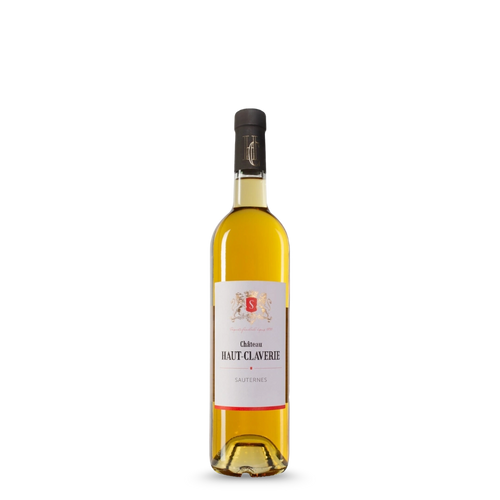
Order now, shipped tomorrow Shipped tomorrow
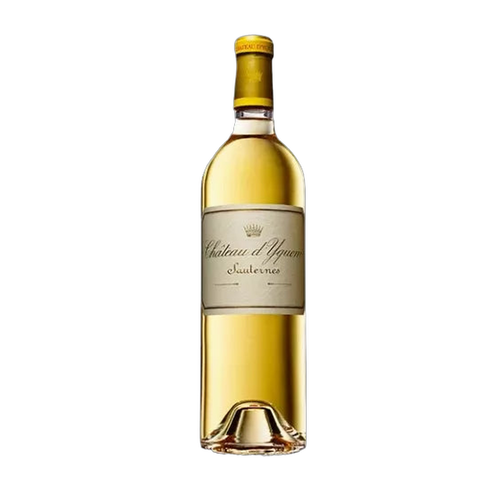
Shipment within approx. 2 business days. Shipment within approx. 2 business days.
Shipment within approx. 2 business days. Shipment within approx. 2 business days.
Shipment within approx. 2 business days. Shipment within approx. 2 business days.
Shipment within approx. 2 business days. Shipment within approx. 2 business days.
Sauternes is a sweet white wine from Bordeaux, made from botrytis grapes that are dried to concentrate aromas and flavors. The region is known for noble rot and iconic producers like Château d'Yquem .
Sauternes is a sweet white wine from Bordeaux made from grapes affected by botrytis cinerea , better known as noble rot. This natural drying process produces concentrated sugars and intense aromas of honey, apricot, and saffron. The question of what makes Sauternes so exceptional is often asked. The answer lies in the unique combination of climate, grape varieties, and winemaking method, which is found nowhere else in the world.
Origin and character
Sauternes is produced in the southern part of Bordeaux, where the Garonne and Ciron rivers create morning fog and dry afternoons. This microclimate is essential for the development of noble rot. The main grapes are Sémillon , Sauvignon Blanc , and Muscadelle , with Sémillon being the dominant variety due to its susceptibility to botrytis.
Château d'Yquem: the icon of Sauternes
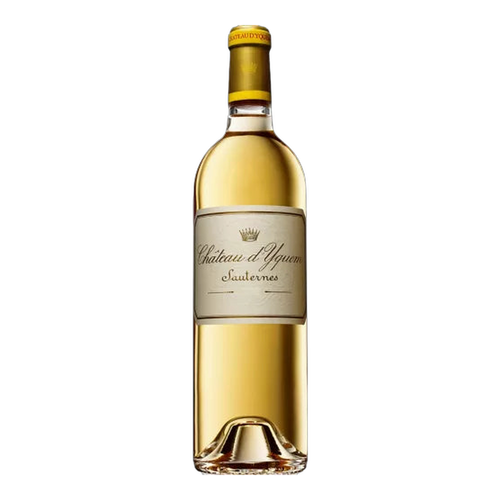
Within Sauternes, one name is unmistakable: Château d'Yquem . It is the only estate classified as Premier Cru Supérieur under the historic 1855 classification. Exceptional vineyard selection, extremely low yields, and long maturation make d'Yquem the most prestigious sweet wine in the world.
In 2019, Château d'Yquem withdrew from the Syndicat Viticole de Sauternes et Barsac , the producers' association representing the appellation. In doing so, the estate distanced itself from the appellation's organizational structure, while continuing to use the official Sauternes AOC designation. This step underscores the château's independent position within the region.
How is Sauternes made?
The grapes are harvested by hand in multiple harvests because botrytis develops unevenly. Only grapes with optimal concentration are selected. After a gentle pressing, slow fermentation and long aging in oak follow. The combination of residual sugar, alcohol, and acidity results in wines of impressive complexity and exceptional longevity. Top wines like Château d'Yquem can easily age for decades.
When do you drink Sauternes?
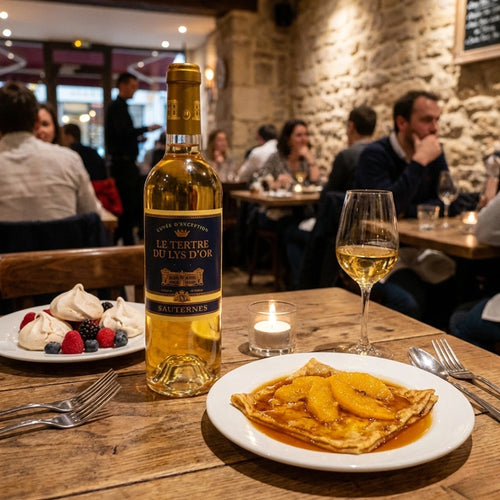
Sauternes is often considered a dessert wine, but it also pairs perfectly with pâté, blue cheese, foie gras, rich sauces, and luxurious aperitifs. Thanks to its high acidity, the wine always remains balanced and never cloyingly sweet.
Why is Sauternes so special?
Production is intensive and risky. Yields per hectare are low, the harvest is labor-intensive, and the selection is strict. As a result, every bottle reflects exceptional craftsmanship. With icons like Château d'Yquem as its flagship, Sauternes remains a global benchmark for fine sweet wines.
Veelgestelde vragen
Which grapes are used for Sauternes?
Sauternes is made from Sémillon, Sauvignon Blanc and sometimes Muscadelle, with Sémillon as the main grape.
Why does Sauternes taste so sweet?
Noble rot causes the grapes to dry out, leaving the juice with concentrated natural sugars.
How long can you keep Sauternes?
Top producers like Château d'Yquem can age for decades without any problem.
What do you eat in Sauternes?
D'Yquem left the Sauternes and Barsac producer association in 2019, but officially remains Sauternes AOC.


