


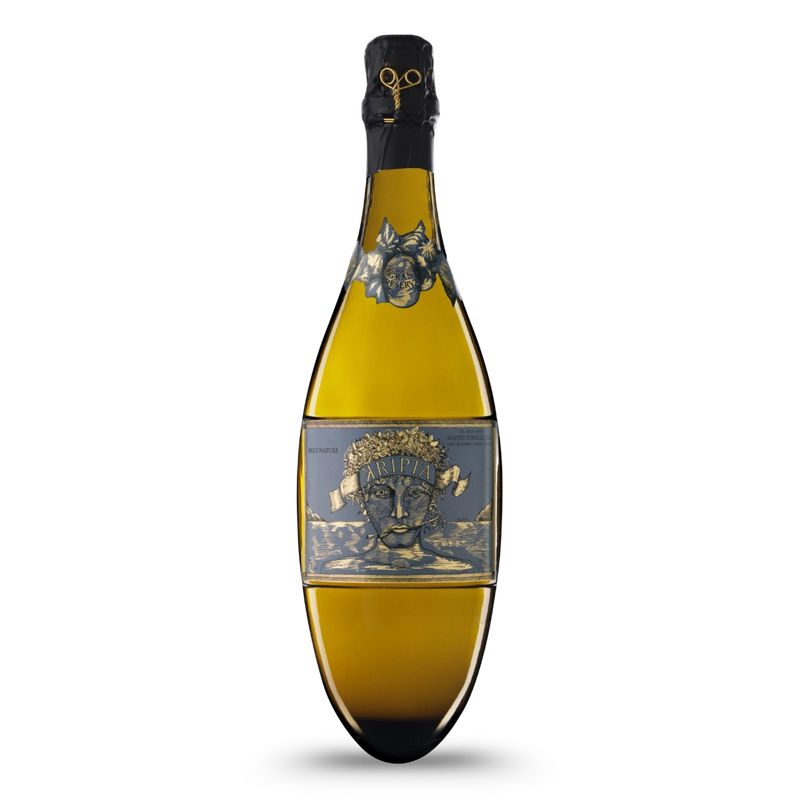


Kripta is the flagship of Celler Kripta, a Brut Nature that shines in finesse, length, and precision after an exceptionally long bottle maturation. What does Brut Nature mean in practice? No sugar is added after disgorgement, allowing you to taste the pure character of the grapes and their origin.
Kripta is built upon three historic plots, each playing a distinct role in the flavor profile.
-
Vicari, Sant Pau d’Ordal, Macabeu, 1962, 239 meters, gravel and excellent drainage
Delicate fruit with white blossom, finesse, and elegance. Bush vines with an average yield of around 6,000 kilos per hectare provide the foundation for Kripta’s refinement. -
Mercader, Sant Sadurní d’Anoia, Xarel·lo, 1974, 162 meters, limestone and clay
Loose bunches with thick skins provide power, body, and structure. Trellising increases the leaf surface area and promotes even ripening. -
Lola, Sant Joan de Mediona, Parellada, 1969, 650 meters, mountain terroir
Large temperature differences between day and night ensure freshness, high natural acidity, mineral salinity, and subtle tropical notes.
Each grape variety ferments separately with carefully selected proprietary yeasts. The primary fermentation lasts about 28 days at 16 degrees, on fine lees for added depth. This is followed by the tirage, the bottling with yeast and sugar that starts the second fermentation in the bottle. Kripta then matures for nearly 85 months sur lie in the cellar at 17 degrees. Why age with natural cork rather than a crown cap? Cork directs autolysis differently and provides extra complexity, subtlety, and a silky texture. Kripta is only released after a minimum of 8 years of total maturation. Alcohol is 11.5 percent, total acidity 6.2 grams per liter, precisely the backbone you feel in the glass.
Macabeu 45 percent, Xarel·lo 20 percent, Parellada 35 percent.
Macabeu brings blossom and white fruit, Xarel·lo provides backbone and length, Parellada delivers high-altitude freshness, delicate mousse, and citrus nuance. The blend is therefore both ripe and razor-sharp in its precision.
The iconic amphora bottle was created and patented by Agustí Torelló Mata and is made entirely by hand. The shape is functional. The curve allows the yeast sediment to remain in gentle circulation, a natural bâtonnage that provides extra complexity, balance, and a creamy texture.
The label by artist Rafael Bartolozzi evokes the landscape of Cadaqués with poppies and an olive branch. It is a clear nod to its Mediterranean origins, a visual translation of the culture upon which Kripta is built.


