


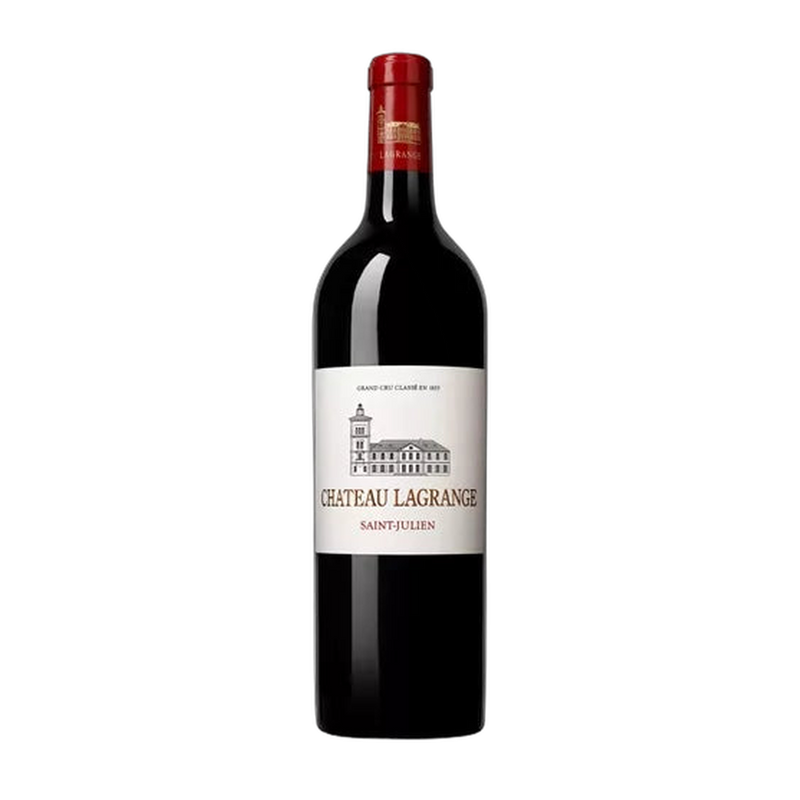


The estate's smallest harvest in thirty years yielded small, concentrated berries in 2020 and a Saint-Julien that marries power with clarity. Tense tannins, a creamy core, and vibrant freshness give the wine a layered, classic style with cellaring potential until 2050. As the Grand Vin of Château Lagrange, 3rd Grand Cru Classé in 1855, this vintage unites the ripeness of a warm growing season with the signature structure of the Médoc.
The contiguous vineyard block is divided into 103 plots, allowing differences in soil and ripeness to be monitored individually.
- Location / origin: The grapes come from Saint-Julien-Beychevelle, in the west of the Saint-Julien appellation on the Left Bank of the Gironde. Saint-Julien is located in the Médoc, within the Bordeaux region of France.
- Soil & exposure: The vineyard sits on two ridges of Günz gravel with north and south-facing slopes. Pebbles and gravel provide surface drainage, while the clay and limestone subsoil helps retain water reserves.
- Climate & vintage: The temperate maritime climate saw a mild winter and an early start to the growing season in 2020. After a warm, dry summer, the team waited four days to harvest the Cabernet Sauvignon, allowing aromas and tannins to further develop.
- Vineyard: The vines were 45 years old on average, planted at a high density of 8,700 to 10,000 plants per hectare. This allows for precise selection based on grape variety, plot, age, and ripeness.
The cellar is designed to treat the 103 plots as individually as possible.
- Harvest & selection: The manual harvest took place from September 16th through October 2nd, 2020. The grapes arrived in small crates, were first hand-sorted as whole clusters, and then checked berry by berry with an optical sorting machine. Only 38% of the harvest was used for the Grand Vin.
- Fermentation: Plots and even sub-plots were fermented separately in 102 temperature-controlled stainless steel tanks. Traditional fermentation lasted 18 to 25 days at 26–28 °C, with controlled remontage, pigeage, or délestage for careful extraction. Malolactic fermentation occurred via co-inoculation.
- Oak aging: After the initial blend in January, the wine matured for 21 months in oak barrels, 50% of which were new. Fining with fresh egg whites in the barrel and a final blending before bottling further balanced the structure.
Cabernet Sauvignon leads the blend, supplemented by Merlot and a small amount of Petit Verdot.
- 74% Cabernet Sauvignon: Forms the backbone of the wine, providing structure, freshness, and length.
- 24% Merlot: Gives the blend a riper, softer core and additional breadth on the mid-palate.
- 2% Petit Verdot: Adds color, firmness, and a subtle spicy accent.


