
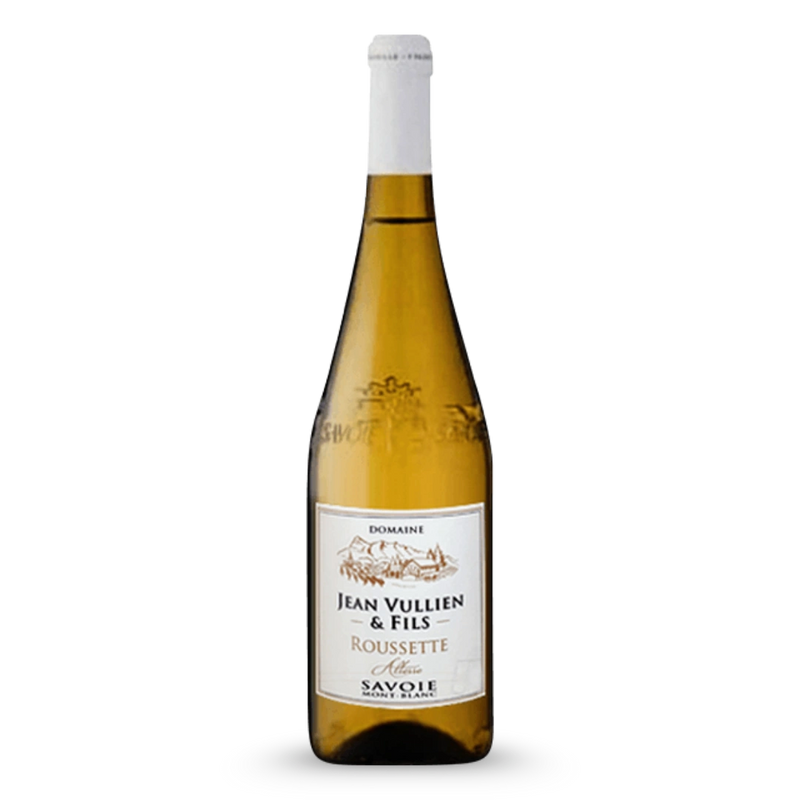


Jean Vullien Roussette de Savoie 2024 is a dry white mountain wine from the Combe de Savoie, made from 100% Altesse. This local grape variety is known here for elegant white wines with floral aromas, exotic fruit, and a beautiful round structure. The wine comes from the hillsides around Fréterive and Saint Jean de la Porte, where limestone scree soils, southern exposure, and shelter from northern winds combine to create a style that is fresh yet full-bodied.
This Roussette de Savoie comes from the Combe de Savoie, between Chambéry and Albertville.
• Location / Origin: The vineyards are situated on the hillsides of Fréterive and Saint Jean de la Porte, in the heart of the Combe de Savoie. This location is protected from northern winds and gives the Altesse a ripe yet fresh expression.
• Estate: Domaine Jean Vullien is located in Fréterive, at the foot of the Massif des Bauges. The estate encompasses 38 hectares of vineyards, focused on local grapes such as Jacquère, Altesse, Roussanne, and Mondeuse.
• Soil: The vines grow on limestone scree soils with stones. This clay-limestone (argilo-calcaire) soil provides the wine with structure, tension, and a mineral undertone.
• Exposure: The hillsides face directly south. This sunny location allows the Altesse to ripen well, while the mountainous surroundings help maintain freshness in the wine.
This white Savoie wine is made entirely from Altesse.
• Altesse – Roussette de Savoie: Altesse gives this wine its floral fragrance, exotic fruit notes, round structure, and long finish. In Savoie, this is the grape behind Roussette de Savoie, a style that has more body and complexity than many of the lighter mountain wines from the region.
The vinification is focused on freshness, aromatic purity, and extra texture.
• Harvest & Pressing: The grapes are mechanically harvested and immediately pneumatically pressed. Pneumatic pressing is a gentle method that helps keep the juice pure and fine.
• Fermentation: Alcoholic fermentation lasts about 3 weeks at a low temperature in temperature-controlled stainless steel tanks. This cool fermentation helps preserve the fruit and floral aromas of the Altesse.
• Malolactic fermentation: The wine undergoes malolactic fermentation. During this process, sharper malic acid is converted into softer lactic acid, making the wine feel rounder and smoother.
• Bâtonnage: The wine undergoes bâtonnage twice a week. This involves stirring the fine lees through the wine, which provides more creaminess, structure, and length.
• Production: Approximately 30,000 bottles of this Roussette de Savoie are produced.


