
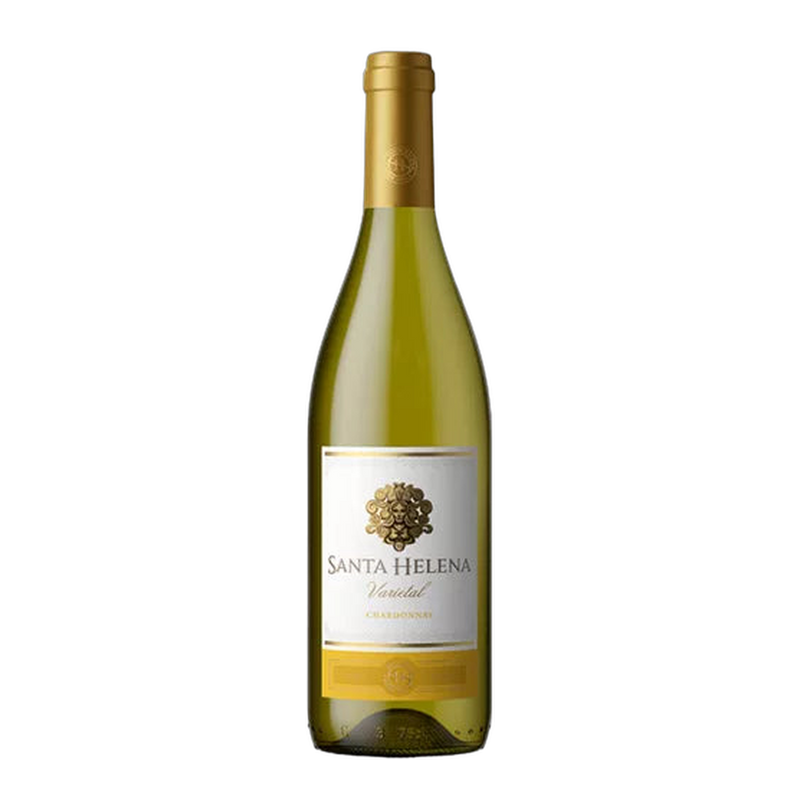


A beloved winemaker and Helena's father became seriously ill in the 20th century. His family and employees devoted themselves enormously to his health, causing the estate to decline significantly. When his daughter, Helena, saw how the estate was losing its charm, she decided to revive every vine in the valley. With determination and passion, she succeeded in reviving the quality, and once her father recovered, he decided to name his wines Santa Helena, in honor of his daughter. Together, they completed and perfected their oenological work, a legacy that endures to this day.
Chile boasts several large wine regions. By far the most important is Central Valley. It's located in the center of the country, a few hundred kilometers from the capital. The production area covers approximately 10,000 hectares. The most commonly planted grapes are the blue Cabernet Sauvignon and Merlot, and the white Chardonnay and Sauvignon Blanc. Santa Helena also owns several vineyards in this area. The climate in Central Valley is slightly cooler and wetter, which favors grape ripening.
The Chardonnay is harvested between late January and early March. Warm days and cold nights in the shelter of the Andes provide ideal conditions for a fresh and lively Chardonnay. To preserve its freshness, the Chardonnay is vinified with controlled fermentation over a period of about 20 days and stored briefly in steel tanks. It is bottled just a few months after harvest to allow all its aromas and fragrances to develop while still young.
The Varietal Chardonnay is a bright golden yellow with aromas of peach, pineapple, banana, and a touch of sweet vanilla. The palate is fruity and invigorating, with a good balance between the fresh, soft acidity and the riper flavors. The finish is silky smooth.


