
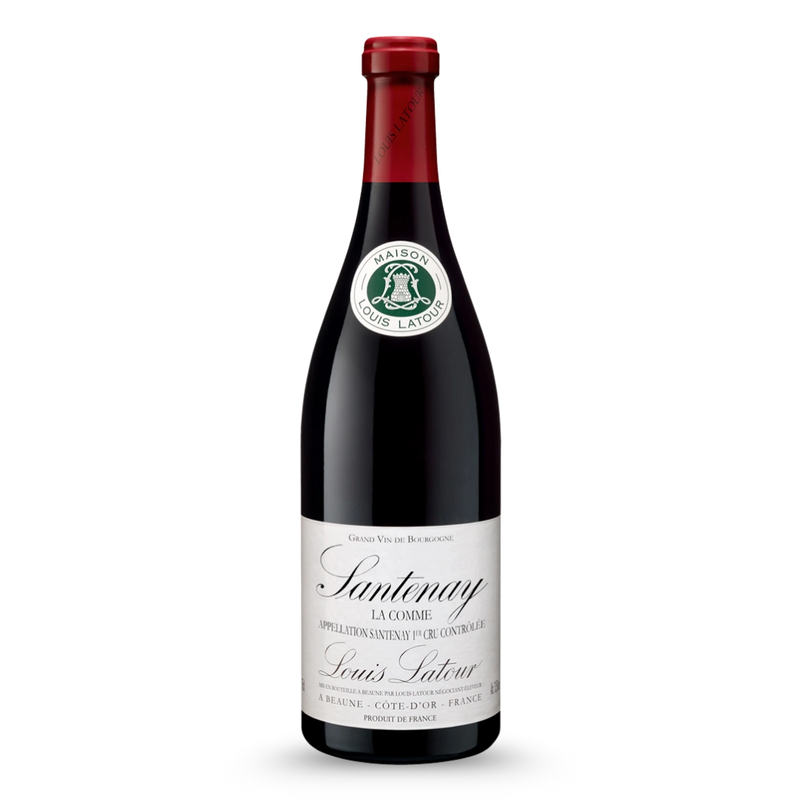


The 2017 Louis Latour Santenay 1er Cru La Comme is a red Burgundy made from Pinot Noir sourced from one of the stronger premier cru vineyards in Santenay. La Comme is located in the northern part of the appellation, bordering Chassagne-Montrachet, where the soil contains more gravel, marl, and limestone. This gives this Pinot Noir extra structure and richness, while its position on a gentle southeast-facing slope helps the grapes achieve full ripeness.
Santenay is located in the Côte de Beaune, the southern part of the Côte d’Or where Pinot Noir often turns out slightly firmer and spicier than in villages further to the north.
• Location / Origin: La Comme is situated on the north side of Santenay, bordering the vineyards of Chassagne-Montrachet. This part of the appellation is often considered particularly well-suited for producing powerful, structured Santenay.
• Vineyard name: The name La Comme is the regional form of "combe." The vineyard is situated as an extension of the Combe of Saint-Aubin, which makes its location easily identifiable within this part of the Côte de Beaune.
• Soil: The soil consists of clay and limestone, with more gravel and marl in this northern section. This combination provides the Pinot Noir with both structure and ripeness, giving the wine more power and depth.
• Exposure: The vines grow on a gentle slope facing southeast. This position catches the morning sun and supports consistent ripening of the grapes.
• Vineyard: The vines are 25 years old on average, and the yield is around 40 hl per hectare. This controlled yield helps to achieve concentration and ripe fruit in the wine.
This Santenay Premier Cru is made entirely from Pinot Noir.
• Pinot Noir – Santenay Premier Cru: Pinot Noir forms the entire foundation and provides the wine with its ruby-red color, cherry fruit, soft tannins, and earthy refinement. In Santenay, Pinot Noir often gains a bit more firmness, spiciness, and structure than in lighter parts of Burgundy.
Vinification follows a classic Burgundian approach, with fermentation and aging in oak barrels.
• Harvest & Selection: The grapes are harvested by hand. Manual picking allows for precise selection, which is important for Pinot Noir from a premier cru vineyard.
• Fermentation: The wine undergoes traditional fermentation in oak barrels and completes malolactic conversion. What is malolactic conversion? It is a secondary fermentation that softens the acids, making the wine feel rounder and smoother.
• Aging / Oak treatment: The wine is aged for 8–10 months in French oak barrels from Louis Latour’s own cooperage, using a medium toast. This maturation provides extra roundness, subtle spiciness, and a light mocha touch, without overwhelming the cherry fruit.


