


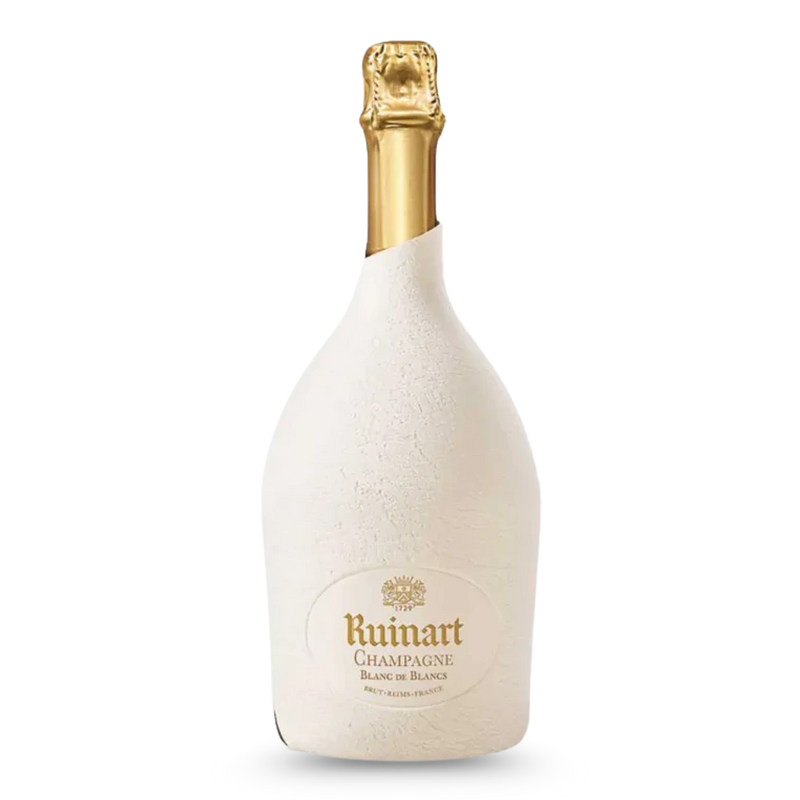


The different origins each contribute their own character to the final blend.
- Location / origin: The Chardonnay comes from 25–30 crus, mainly spread across the Côte des Blancs, Montagne de Reims, Sézannais, and Vallée de la Vesle. All these areas are located within the Champagne appellation in Northern France.
- Soil: The Champagne region has a predominantly calcareous subsoil consisting of chalk, marl, and hard limestone. The porous chalk, in particular, ensures good drainage while retaining water for drier periods.
- Climate & influences: Oceanic and continental influences meet in a northern and relatively cool wine climate. This allows the grapes to ripen while retaining the fresh acidity that is essential for the lively structure of Champagne.
Ruinart uses both different vineyards and multiple harvest years to create a recognizable and consistent style.
- Harvest & blending: The grapes are harvested by hand. The base wines are supplemented with 20–30% reserve wine from previous harvests, which adds extra depth and continuity to the non-vintage blend.
- Fermentation: The alcoholic fermentation takes place in temperature-controlled stainless steel tanks. This is followed by malolactic conversion, which makes the fresh structure rounder and softer.
- Cellar aging & dosage: After the second fermentation in the bottle, the champagne rests in the cellars for 2–3 years. A dosage of 7 grams per liter brings the wine within the dry Brut style and supports the balance between citrus freshness and ripe fruit.
Chardonnay forms the base of this Blanc de Blancs entirely on its own.
- 100% Chardonnay: Provides the floral fragrance, ripe citrus aromas, and fresh tension, while the blend from different crus also yields breadth and a smooth mouthfeel.


