

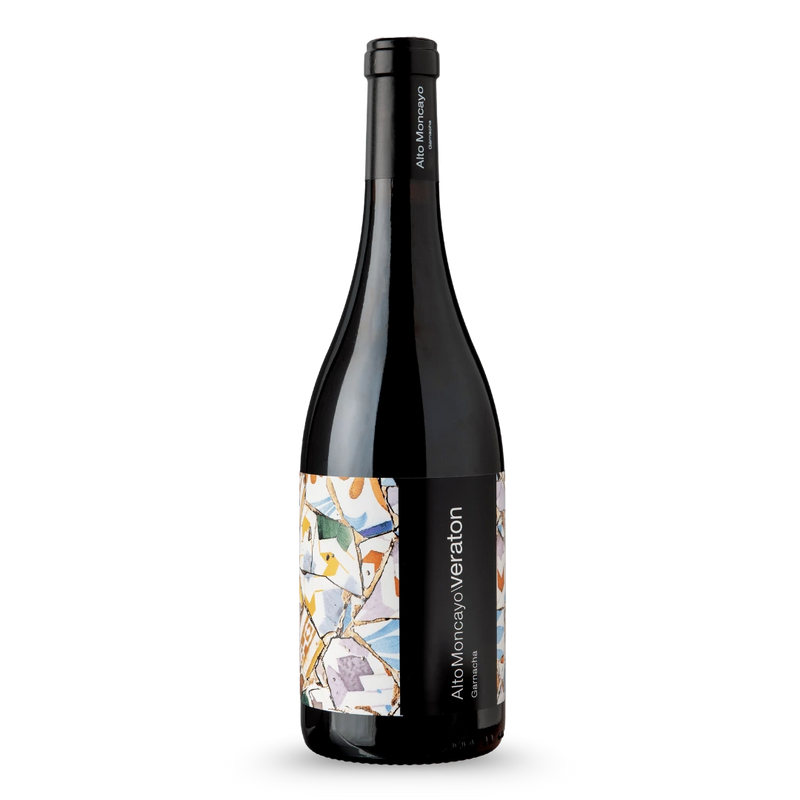


Alto Moncayo Veraton is Bodegas Alto Moncayo 's entry-level wine , made from old Garnacha vines cultivated at high altitude in Campo de Borja. The project was founded in 2002 with one clear ambition: to demonstrate the refinement and power of Spanish Garnacha when working with old vineyards and meticulous care in the cellar. What kind of wine is Alto Moncayo Veraton? It's a full-bodied, modern Garnacha with ripe black fruit, spicy depth, and a serious structure, intended as a serious gastronomic wine, not just a glass of red.
Alto Moncayo Veraton comes from Spain , from Aragon , in the DO Campo de Borja. The grapes grow in vineyards around Tabuenca and Borja, on windy slopes with southerly exposure. The vines are 30 to 50 years old and are planted with local Garnacha clones, on soils consisting of calcareous clay, iron-rich clay, gravel, and stones, which gives the fruit concentration and freshness. The oldest plots even date back to plantings from the 1920s, so you can clearly taste that this is not a new planting. Bodegas Alto Moncayo itself was founded in 2002 and has since become a benchmark for powerful, high-altitude Garnacha from Campo de Borja.
The selected, perfectly ripe bunches are harvested by hand and fermented in small stainless steel tanks at controlled temperatures. Alcoholic fermentation lasts approximately 12 to 15 days, with 7 to 8 days of skin maceration to extract color, aroma, and structure from the skins without hardening the tannins. After complete malolactic fermentation, the wine is aged for 16 months in oak, in a combination of 225-liter French barriques and slightly larger 300-liter American barrels. Approximately 80% of the barrels are new and 20% are second-year, giving Veraton considerable depth and spice, while maintaining its fruit and freshness. The wine is made by José Luis Chueca, who and his team monitor the different plots individually and only at the end compile a final blend.
Garnacha – Tabuenca & Borja
Alto Moncayo Veraton is 100% Garnacha from old vines (30 to 50 years old), planted on calcareous, stony soils around Tabuenca and Borja, which provides ripe black and red fruit, lots of concentration and yet sufficient freshness in the structure.


